Connecting fragmented data into intelligent, decision-ready ecosystems with Experion Technologies.
Today’s enterprises generate data at unprecedented scale. Cloud platforms, SaaS applications, IoT devices, data lakes, legacy environments, and partner ecosystems continuously produce vast volumes of information. While data creation has accelerated, the ability to use that data effectively has not progressed at the same pace.
Conventional data integration methods, largely dependent on rigid ETL pipelines and manually configured rules, are increasingly unable to support modern, fast-changing environments. Frequent schema changes, the need for real-time data access, unstructured data formats, and distributed ownership models expose the limitations of traditional integration tools.
AI data integration addresses these challenges by embedding intelligence into how data is ingested, mapped, cleansed, and orchestrated. Instead of brittle pipelines, organizations gain adaptive, learning-driven systems that evolve with change. The outcome is faster insights, improved data trust, reduced operational effort, and a strong foundation for analytics, automation, and enterprise AI initiatives.
What Is AI Data Integration?
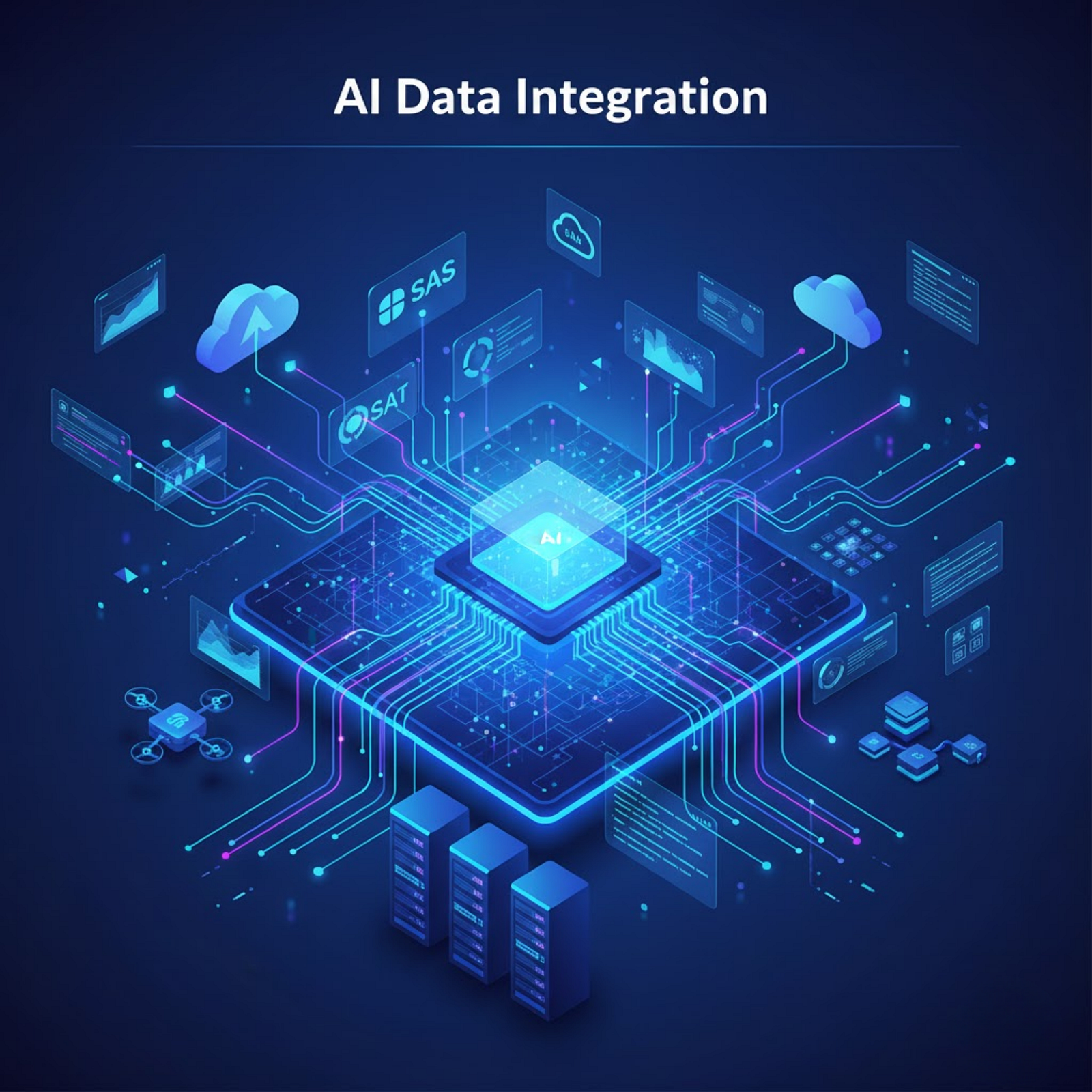
AI data integration is the application of artificial intelligence to automate, enhance, and continuously refine the way data is connected, transformed, and managed across diverse systems. These systems may include cloud platforms, SaaS solutions, on-premises databases, IoT environments, partner applications, and legacy infrastructure.
For business leaders, AI data integration represents a shift away from static, manually built pipelines toward intelligent systems that understand data patterns, adapt to change, and scale alongside organizational growth. Unlike traditional integration tools that rely on fixed schemas and predefined rules, AI-driven data integration uses learning-based techniques to manage complexity and variability across modern data ecosystems.
By embedding intelligence directly into the integration layer, enterprises build resilient pipelines that evolve as data sources, formats, and business needs change. This makes AI data integration a foundational capability for analytics, automation, and enterprise-wide AI adoption.
Role of Machine Learning, NLP, and Automation in Integration
Machine learning is central to AI data integration because it learns relationships between data elements across disparate systems. Rather than relying on manual field mapping, ML models automatically identify similarities, recommend mappings, and improve transformation logic over time as more data is processed.
Natural language processing strengthens integration by interpreting metadata such as column names, field descriptions, logs, and documentation. NLP enables systems to understand intent and context, improving accuracy even when naming conventions and structures differ significantly between sources.
Automation connects these capabilities into cohesive workflows. Automated pipelines manage ingestion, transformation, validation, and delivery while continuously monitoring performance. When anomalies or failures occur, automation initiates corrective actions, minimizing downtime and reducing manual intervention.
Together, machine learning, NLP, and automation transform data integration from a maintenance-heavy task into a self-optimizing system.
AI Data Integration vs AI-Powered Analytics
AI data integration and AI-powered analytics play complementary but distinct roles within enterprise data ecosystems.
AI data integration focuses on making data usable, consistent, and connected. It ensures that information from multiple sources is ingested accurately, standardized, enriched, and delivered in a form analytics and AI systems can trust.
AI-powered analytics focuses on extracting insights, predictions, and recommendations from that data. Advanced models, dashboards, and decision-support tools depend on reliable, well-integrated data to function effectively.
Without intelligent data integration, even the most sophisticated analytics initiatives fail to deliver value. Poor data quality, inconsistent definitions, and fragmented pipelines limit the impact of AI models. AI data integration provides the intelligent foundation that allows analytics and AI initiatives to scale and deliver measurable business outcomes.
Why Artificial Intelligence Data Integration Is Now a Business Priority?
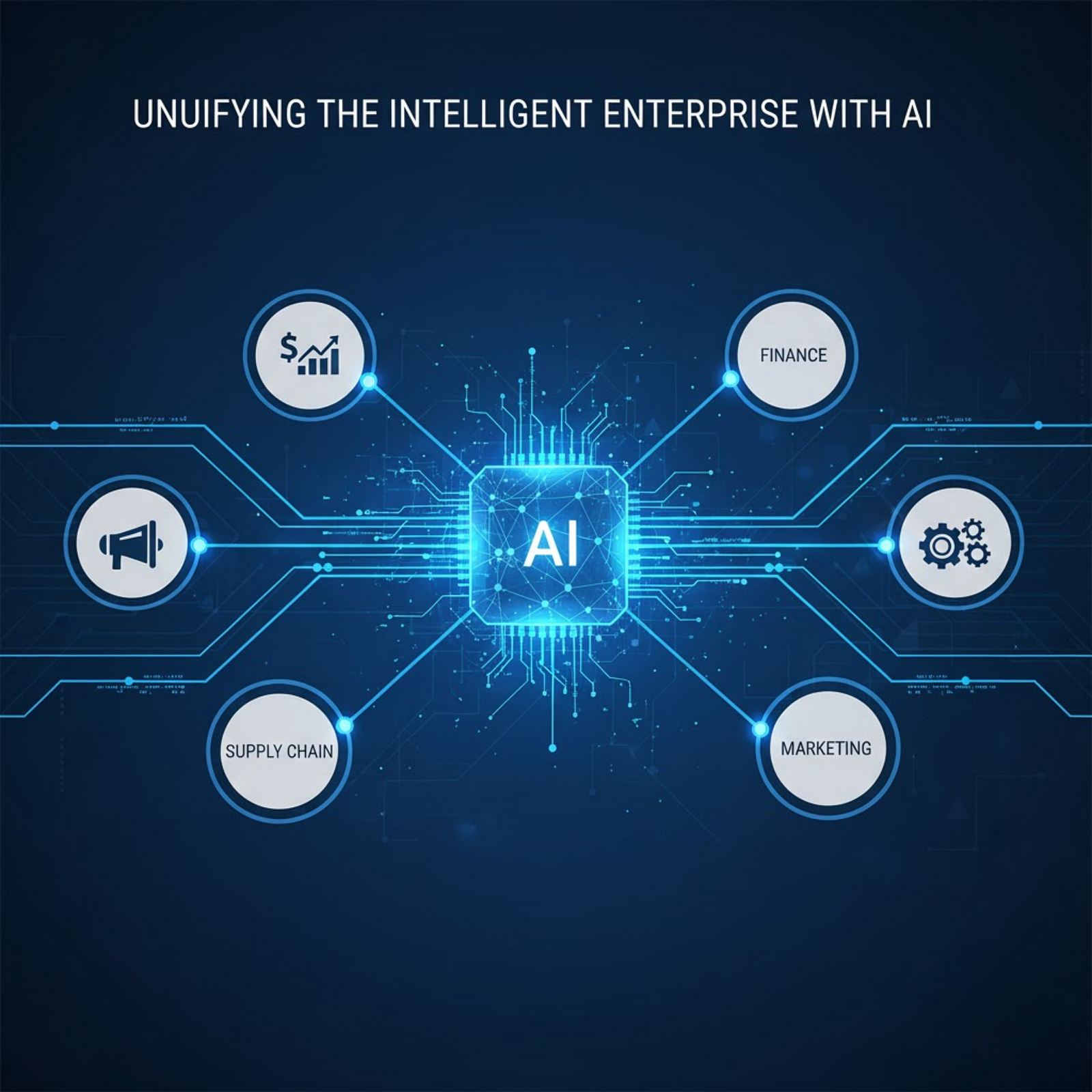
Organizations across industries are striving to become data-driven, yet many struggle to convert data into timely, actionable insight. Fragmentation across cloud services, SaaS platforms, and legacy systems slows decision-making and creates blind spots.
As real-time analytics, business intelligence, and enterprise AI become central to competitive advantage, data integration must evolve accordingly. Artificial intelligence data integration enables support for real-time operations, predictive analytics, and AI-driven automation without constant pipeline redesign.
AI-driven integration reduces dependence on highly specialized engineering teams by automating complex tasks. It shortens time to insight by accelerating data onboarding and transformation. It also supports scalable operations across cloud, hybrid, and on-prem environments, enabling digital growth.
As organizations deploy AI across finance, operations, customer experience, and supply chains, data integration becomes the backbone that determines success. Intelligent integration ensures AI initiatives are built on trusted, accessible, and continuously optimized data foundations.
How AI in Data Integration Works: Step-by-Step Architecture
Intelligent Data Ingestion
AI-enabled platforms ingest structured, semi-structured, and unstructured data from databases, APIs, SaaS tools, IoT streams, and files. Automated source profiling and schema detection reduce manual setup while supporting both batch and real-time ingestion.
AI-Driven Data Mapping and Transformation
Machine learning models automate data mapping across systems, even when formats and naming conventions differ. When schema drift occurs, pipelines adapt without breaking. Transformation logic becomes adaptive rather than rule-bound.
Data Quality, Cleansing, and Enrichment
AI detects anomalies, duplicates, and inconsistencies automatically. Validation rules evolve over time, while enrichment integrates reference data to improve usability and accuracy.
Metadata Management and Lineage Tracking
AI generates metadata automatically and maintains end-to-end lineage. This improves trust, governance, and downstream impact analysis.
Continuous Monitoring and Optimization
AI continuously monitors pipeline health, predicts failures, and applies self-healing actions. Performance optimization becomes proactive rather than reactive.
AI Data Integration vs Traditional Data Integration
Traditional integration was built for predictable environments using static ETL pipelines and scheduled batch processing. While effective in stable contexts, this approach struggles with today’s dynamic ecosystems.
AI-powered integration introduces intelligence into the integration layer. Self-learning models recognize patterns, adapt to schema changes, and scale with data volume and velocity. Automation detects failures early and resolves issues in real time.
As organizations scale, AI-driven integration delivers higher accuracy, faster onboarding of new sources, and lower maintenance effort. Intelligent platforms are designed to absorb change, making them essential for modern digital enterprises.
Key Technologies in AI Data Integration
AI data integration combines multiple technologies into a unified ecosystem. Machine learning enables automated mapping, classification, and anomaly detection. Automation orchestrates workflows reliably at scale.
Metadata intelligence improves transparency and trust, while cloud-native architectures provide elasticity and global scalability. API-driven connectivity enables seamless integration across SaaS, on-prem, and partner systems.
Together, these technologies create resilient, self-optimizing integration environments for both real-time and batch use cases.
Key Business Benefits of AI Data Integration
AI-powered integration accelerates time to insight, enabling faster responses to market and operational signals. Improved data accuracy increases confidence in analytics and AI initiatives.
Organizations reduce integration and maintenance costs through automation. Scalable architectures support growth across hybrid environments. Real-time and predictive analytics enable proactive decision-making.
At Experion, we help enterprises replace fragmented data landscapes with intelligent data foundations that power analytics, automation, and AI at scale.
AI-Driven Data Integration Across Industries
Financial Services
AI integration unifies transactional, customer, and external data to support real-time risk analysis, fraud detection, and compliance.
Healthcare and Life Sciences
Integrated data from EHRs, devices, and labs supports predictive care, improved outcomes, and regulatory alignment.
Manufacturing and Supply Chain
IoT, ERP, and MES integration enables predictive maintenance, demand forecasting, and operational visibility.
Retail and E-commerce
Unified customer and inventory data supports personalization, pricing optimization, and real-time demand response.
Enterprise SaaS and IT Operations
Operational intelligence improves incident detection, reduces resolution time, and increases service reliability.
AI-Powered Data Integration for Real-Time and Streaming Data
Real-time decisions require immediate data processing. AI-powered integration enables intelligent stream processing that filters noise, detects patterns, and enriches events with context.
By combining streaming and historical data, organizations gain visibility, responsiveness, and predictive capability across fraud detection, maintenance, personalization, and monitoring use cases.
Role of AI and Data Integration in Modern Data Architectures
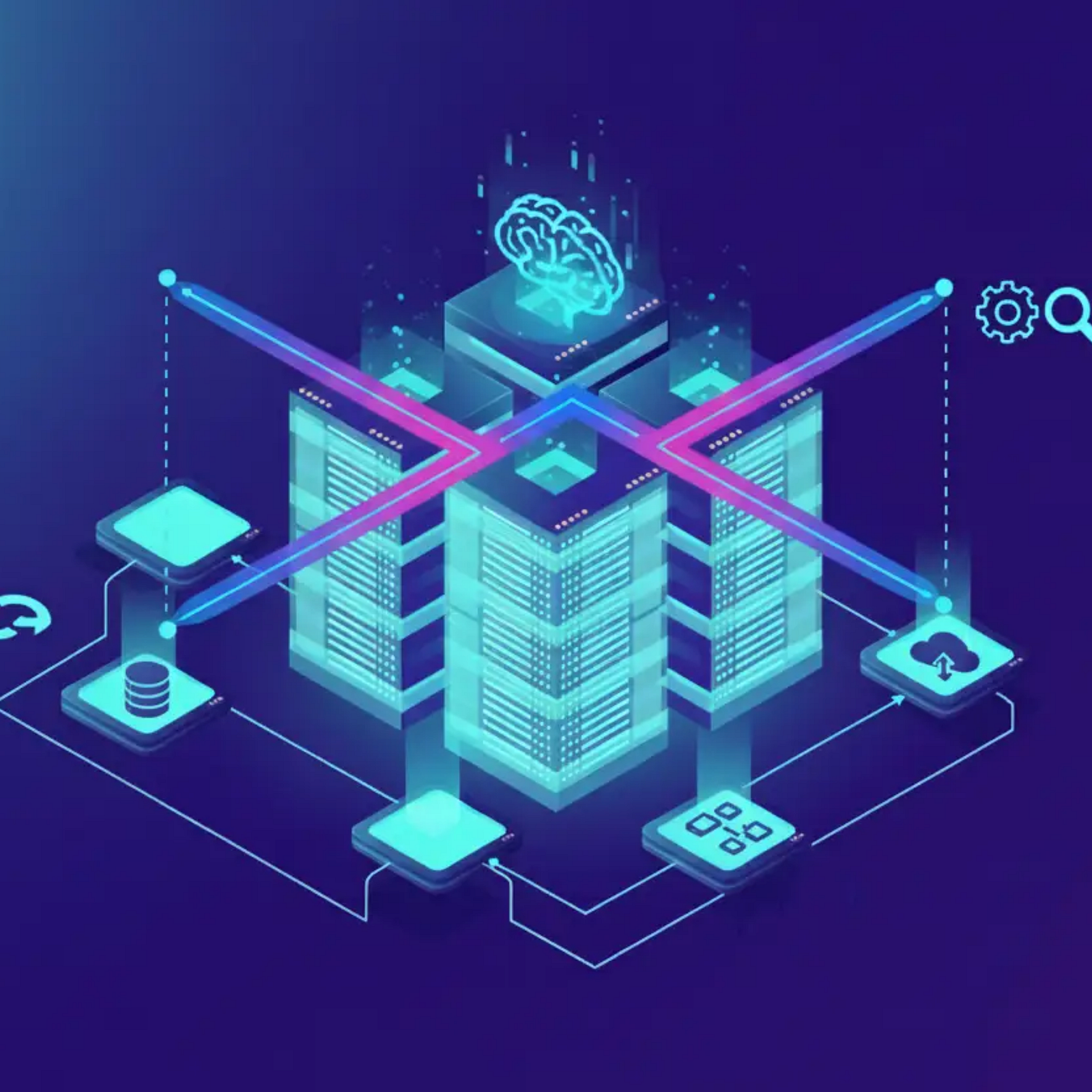
Modern architectures include data lakes, warehouses, and lakehouses. AI data integration connects these components, enabling seamless data flow to analytics and AI platforms.
AI integration also underpins Data Mesh and Data Fabric strategies by enabling decentralized ownership with centralized intelligence and governance.
Data Governance, Security, and Compliance in AI Data Integration
AI embeds governance into pipelines through access controls, masking, anonymization, and continuous monitoring. Automated lineage and documentation make compliance proactive and scalable.
Challenges in AI Data Integration and How to Overcome Them
Common challenges include silos, data quality, transparency, and legacy integration. These are addressed through automated discovery, validation, explainable AI, phased modernization, and strong change management.
AI Data Integration Implementation Best Practices
Start with high-impact use cases, build reusable components, establish governance early, define success metrics, and continuously improve using feedback and performance data.
Measuring ROI of AI Data Integration
Short-term ROI comes from reduced costs and faster insights. Long-term value emerges through agility, reliability, and scalable AI-ready data foundations.
How to Choose the Right AI Data Integration Platform?
Evaluate scalability, hybrid support, usability, governance, and total cost of ownership. The best platforms balance intelligence with simplicity and transparency.
How Can Experion Help in AI Data Integration?
Experion designs and delivers AI-powered integration solutions aligned with business goals. From strategy and architecture to implementation and optimization, we help organizations unlock the full value of data.
Future Trends in AI Data Integration
- Autonomous, self-healing pipelines
- Generative AI-driven integration logic
- Natural language orchestration
- Integration as a Service evolution
- Convergence of integration, analytics, and AI
Why AI Data Integration Is the Foundation of Intelligent Enterprises
AI data integration transforms data from a fragmented liability into a strategic asset. By enabling adaptive, trusted, and scalable pipelines, organizations gain speed, resilience, and competitive advantage.
Key Takeaways
- Adaptive, self-learning pipelines replace brittle ETL
- Trusted data accelerates analytics and AI
- Automation lowers cost and complexity
- Real-time integration enables faster decisions
- Built-in governance ensures compliance
- Scalable across cloud and legacy environments
- Core to Data Mesh and Data Fabric strategies
- Enables long-term agility and innovation
- Experion delivers future-ready AI data integration ecosystems
Turn your data into an intelligent business asset with Experion Technologies.
Comments
Post a Comment